





China's First Crowdfunded Research Vessel "Haiying Jiake" Launched
Source:Taizhou Daily
2026-05-08
On May 5th, the "Haiying Jiake," China's first 3,500-ton class comprehensive oceanographic research vessel fully funded, built, and operated with private capital, was successfully launched in Wenling, Taizhou. This milestone fills the void of high-end oceanographic research vessels led by non-governmental forces in China and marks a significant achievement in the deployment of private capital into the professional field of deep-sea scientific exploration.
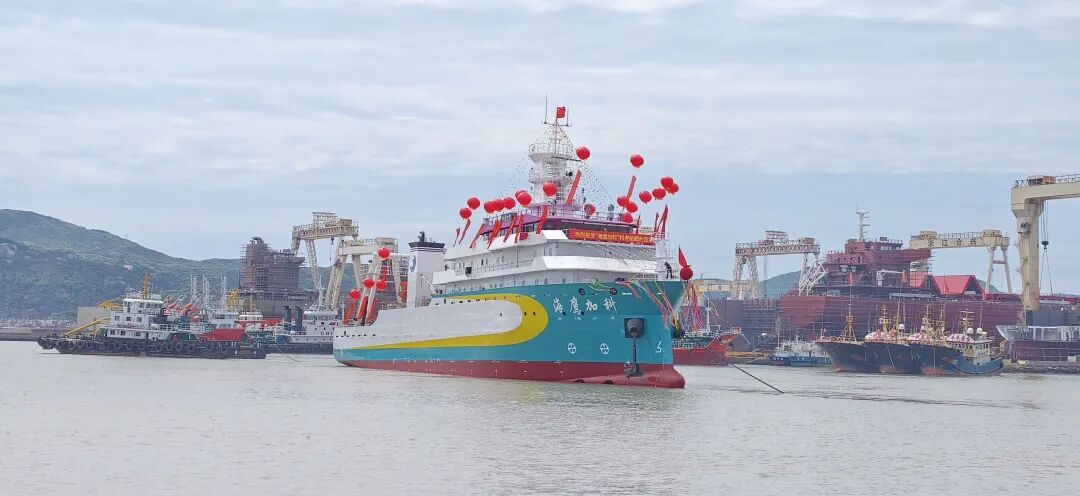
The construction of the research vessel stems from the deep-blue patriotism of fishermen in Wenling. In 2024, Cai Yunjie, a 50-year-old fisherman and shipping company owner from Shitang Town, Wenling, learned about the scarcity of domestic deep-sea research vessels and the constraints on scientific development. He immediately traveled to multiple provinces to connect with universities and research institutes. After identifying the market gap, he resolutely took the lead in launching the vessel construction project. When the news spread, 37 local senior ship captains and maritime practitioners actively crowdfunded shares, rapidly raising the startup capital.
Ultimately, the vessel was successfully completed at a cost of 150 million yuan (approximately $20.8 million USD), significantly lower than similar research vessels on the market. This huge sum was pooled together by fishermen, household by household.
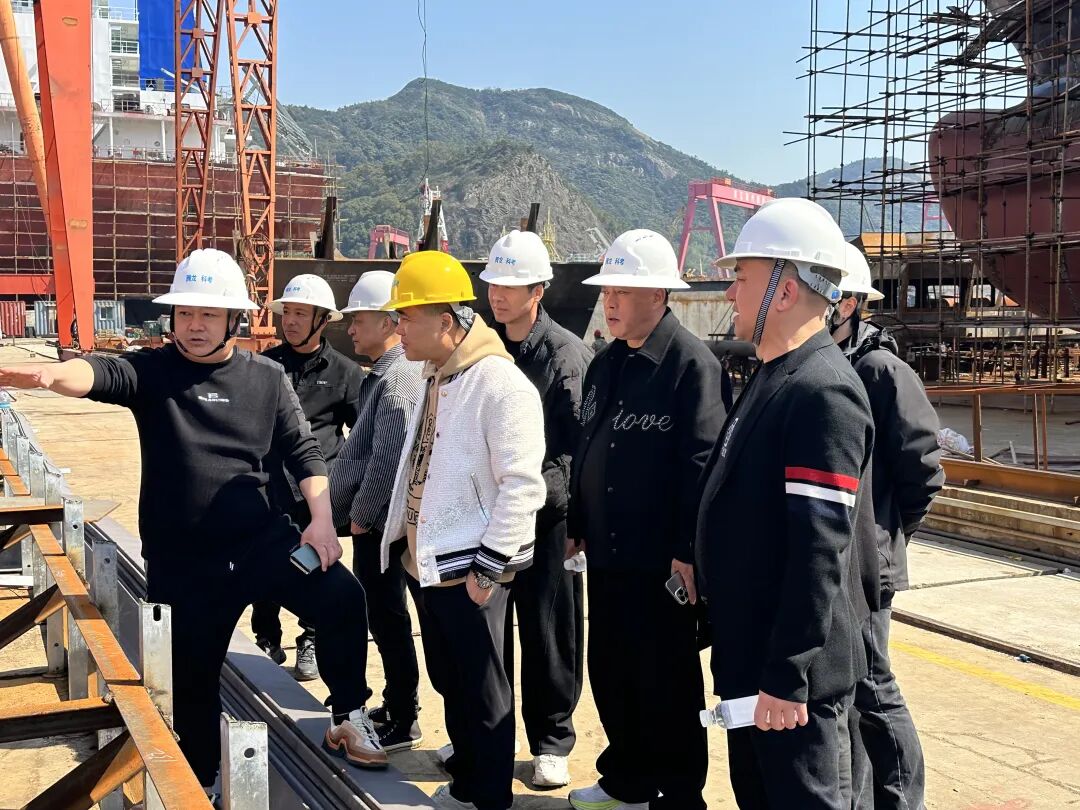
Designed by the Fujian Shipbuilding and Ocean Engineering Technology Research Institute, the "Haiying Jiake" began construction in March 2025, benchmarking international first-class standards for research vessels throughout. The vessel has an overall length of 82 meters, a molded breadth of 18 meters, and a full load displacement of 3,500 tons. Equipped with a full electric propulsion system and a DP2 high-precision dynamic positioning system, it can achieve a station-keeping accuracy of less than 1 meter in sea state 6 conditions. With a range of up to 10,000 nautical miles and endurance exceeding 60 days, the ship holds global unlimited navigation qualifications and possesses thin-ice breaking capabilities, allowing it to conduct various oceanographic operations in distant seas and polar regions.
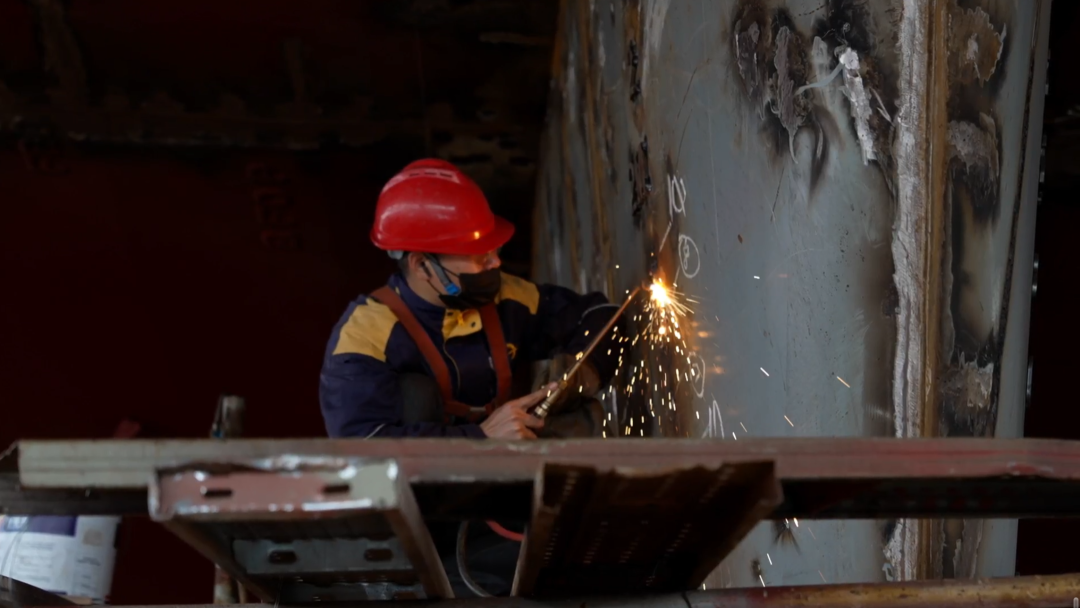
The entire construction process adhered to the rigorous specifications of high-end research vessels: the strength of the marine steel plates is double that of ordinary commercial ships, with key structures utilizing high-strength special steel; relying on 3D digital modeling technology, hull welding precision was controlled within 0.05 millimeters; the total length of cables on board exceeds 150,000 meters, more than three times that of ordinary commercial vessels; and over 2,000 construction drawings were completed. Private shipbuilding craftsmanship has successfully achieved key technological breakthroughs in the field of high-end scientific equipment.
The design and construction deeply integrated the practical navigation experience of frontline fishermen: specialized anti-rolling water tanks were optimized and added, and the number of ballast tanks exceeds 20—double that of ordinary commercial ships of the same scale. This greatly improves stability, enabling continuous scientific operations for 72 hours in the peripheral waters of typhoons.
The vessel features systematic upgrades in professional scientific configurations: it adds over 100 square meters of dedicated sheltered working decks and is equipped with a concealed moon pool—a standard feature on high-end research vessels. With a net width of 2.5 meters and a depth of 7 meters, the moon pool allows for the smooth deployment and recovery of deep-sea detection equipment in harsh sea conditions, reducing wind and wave disturbance and ensuring operational and data measurement accuracy. Over 6 million yuan (approx. $835,000 USD) was invested in professional scientific winches, supporting 10,000-meter class detection optical cables, providing full-ocean-depth detection capabilities. Total investment in specialized scientific equipment exceeds 20 million yuan (approx. $2.78 million USD). Additionally, safety layouts were optimized by changing封闭式 bulkheads around the bridge to open railings, widening navigation visibility and enhancing safety levels for offshore edge operations.

As the first oceanographic research vessel entirely invested and built by private entities in China, the "Haiying Jiake" was dominated by private subjects from planning and fundraising to construction and assembly. This breaks the pattern of state-owned capital exclusively undertaking high-end research vessel construction, paving a new path for non-governmental forces to participate in national marine science and technology endeavors.
According to plans, after launching, the "Haiying Jiake" will dock at the pier for two months of outfitting construction and joint equipment debugging, with sea trials expected in July this year. Upon entering service, it will adopt a leasing operation model to undertake tasks such as marine resource exploration, seabed topography mapping, and marine biological sampling for major universities and research institutes. It will also expand into market-oriented businesses like offshore wind power operation and maintenance and subsea engineering support. Currently, investors have staffed professional crews and supporting facilities and have reached preliminary cooperation intentions with several domestic universities and research institutes.
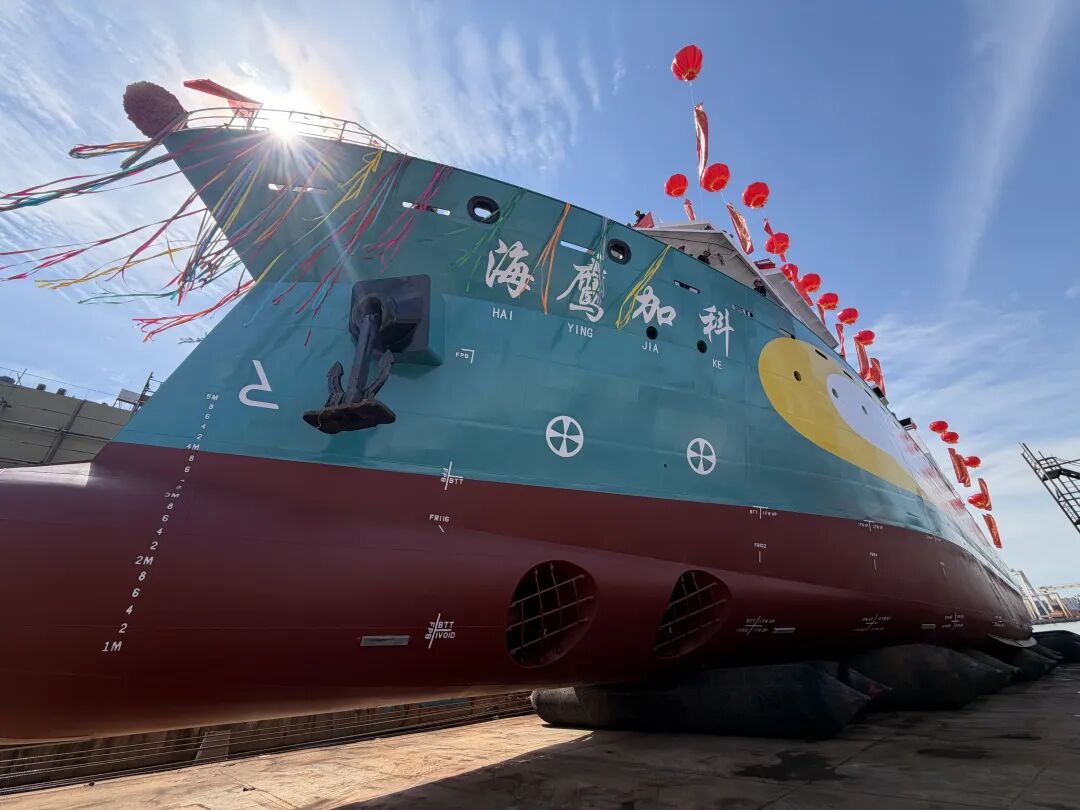
Industry experts state that the commissioning of the "Haiying Jiake" will effectively bridge the supply and demand shortage of China'soceanographic research vessels, break the singular investment structure of high-end scientific equipment, and create a replicable and promotable "Taizhou model" for private capital investing in national scientific equipment construction and market-oriented operations.
Hot News