


Tankers Lead the Red Sea Route Recovery, Analysts Say
Source:
2026-07-15
The momentum of vessels returning to the critical Red Sea and Suez Canal route is gradually building, with containership capacity deployment and service adjustments set to remain a key focus for the market, according to recently released data from Clarksons Research.
The research house notes that crude oil tankers have been the first to resume transits on this route, driven by geopolitical conflict in the Middle East. David Whittaker, a director at the firm, stated: "In recent months, the US-Iran conflict in the Middle East has undoubtedly been the focal point of attention for the shipping industry, and there have been new developments on that front this week... but the situation in the Red Sea remains one of the key factors shaping the supply-demand balance in shipping markets."
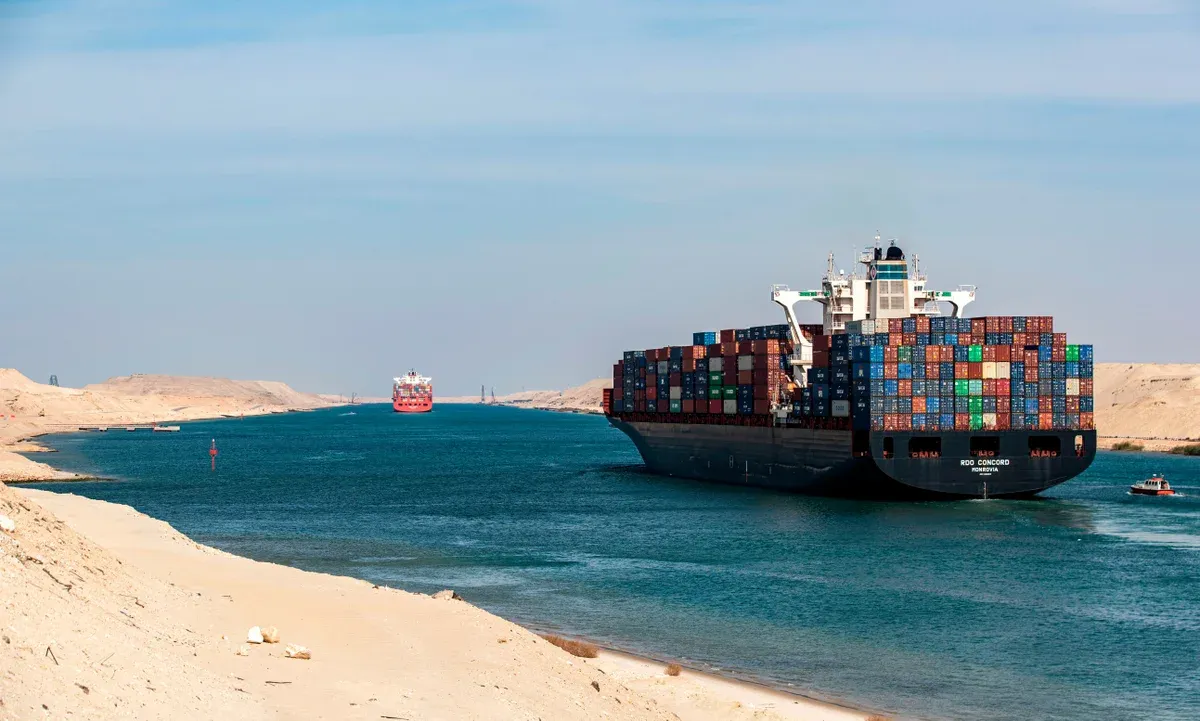
Data shows that Red Sea route cargo volumes accounted for roughly 9% of total global seaborne trade in 2023. However, transit volumes through the Red Sea plummeted by three-quarters for much of 2024 following Houthi attacks on vessels.
Mr. Whittaker noted that the situation has generally undergone a "gradual" evolution since mid-2024, with regional tensions frequently interrupting any signs of improvement in the security situation.
Nevertheless, according to Clarksons data, vessel transits through the Gulf of Aden reached their highest level since the diversions began this June, with a total of 1,350 vessels amounting to 71 million gross tonnes.
Mr. Whittaker pointed out that this development followed an extended "pause" in Houthi attacks on shipping, although the threat of piracy remains.
Despite the recent uptick in vessel traffic through the Red Sea, current levels remain approximately 50% below those of 2023, with marked variation in the pace of recovery across different vessel types.
Data indicates that roughly 70% of the recovery in route volumes since January this year has been attributable to crude oil tankers. Saudi Arabia has been compelled to adjust its export strategy, ramping up crude loadings at its Yanbu terminal on the Red Sea, as a result of the disruption to transit through the Strait of Hormuz. Crude tanker transits have now exceeded year-ago levels, while clean product carrier transits have recovered to only around 60% of the levels seen in the same period of 2023.
Mr. Whittaker noted that beyond the reconfiguration of oil trade flows driven by geopolitical factors, the recovery on other routes has generally been sluggish. The full restoration of traditional east-west trade flows in the region continues to face considerable headwinds.
Market analysis suggests that the uncertainty surrounding the Red Sea situation remains a significant variable affecting the supply-demand balance in shipping markets, and that shipowners and cargo owners need to remain closely attuned to the impact of changes in the security environment on fleet deployment.
Currently, overall vessel transits through the Suez Canal have recovered to only 15% of normal levels, leaving a substantial gap before a full return to normalcy is achieved.
By vessel type, gas carriers remain a relatively rare sight on the Red Sea route, while bulk carriers have recorded a modest increase. On the containership side, transits have recently improved somewhat, with some Asia-Europe services resuming passage, and the port of Jeddah's emerging role as a "land bridge" hub for goods destined for the Gulf region becoming increasingly prominent. However, overall containership transits have recovered to just 10% of normal levels, still down roughly 80% compared with normal periods.
Mr. Whittaker concluded: "For now, it seems that a full return to normal will still take some time." He also noted that, as a consequence of the Red Sea diversions, containerships continue to face an incremental demand boost equivalent to a 12% increase in TEU-mile transport distances.
Hot News