


GMI doubles scale of hydrogen-powered bulk carrier project
Source:Beyond Shipping
2026-09-04
Norwegian emerging shipping company Green Maritime Infrastructure (GMI Group) has doubled the size of its hydrogen-powered bulk carrier project, signing orders for two additional newbuild vessels at Indian shipyard Chowgule Shipyard.
The two new vessels, each approximately 3,000 deadweight tons (dwt), will form a fleet with two sister ships of 4,000 dwt already under construction at Turkish shipyard Gelibolu Shipyard. The first of the four vessels is expected to enter service on Norwegian coastal routes next year.
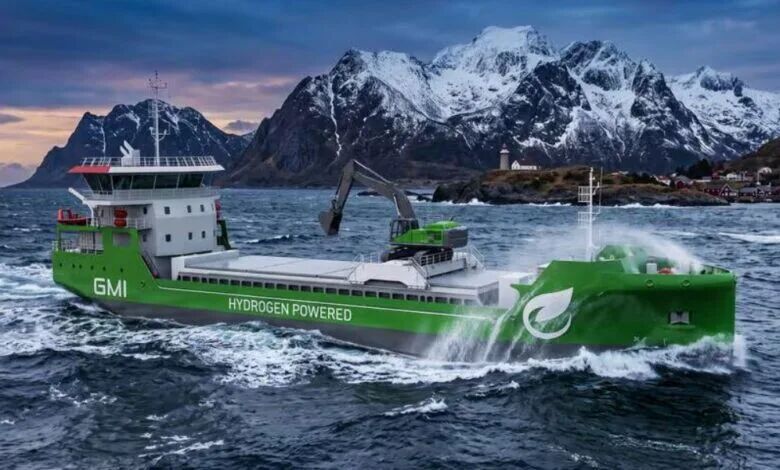
All four ships will feature compressed hydrogen plus fuel cell propulsion systems for coastal transport of asphalt, crushed stone, and other construction-related dry bulk cargoes. GMI has already secured freight contracts with NordAsfalt and Veidekke.
The contract price for the two vessels built in India has not been disclosed, but industry sources estimate the cost per ship at over NOK 300 million (approximately $32 million). On that basis, GMI's total investment in the four hydrogen-powered vessels is expected to exceed NOK 1 billion (about $107 million).
Public subsidies account for a significant portion of the project's financing. Norwegian state enterprise Enova has allocated NOK 137 million (about $14.7 million) for each of the two Indian-built vessels; previously, the two Turkish-built vessels received subsidies of NOK 90 million (about $9.6 million) and NOK 85 million (about $9.1 million), respectively. Thus, Enova's total subsidies for the four confirmed vessels amount to NOK 449 million (about $48 million).
The Norwegian government agency has also set aside subsidy commitments of NOK 201 million and NOK 202 million (approximately $21.5 million and $21.6 million, respectively) for two optional additional vessels that GMI may order, though no final investment decisions have been made on those projects.
GMI Chairman Per Olav Myrstad said that adjustments to Norwegian public procurement policies played a key role in securing the new orders. The Norwegian Public Roads Administration introduced an incentive scheme under which suppliers receive NOK 7.50 per kilogram of CO₂ emissions reduced during asphalt transport. This gives cargo owners a tangible economic incentive to choose zero-emission vessels for their shipments.
GreenH will supply the hydrogen and is simultaneously developing bunkering infrastructure along the Norwegian coast. The first refuelling facility for the fleet is expected to be completed in Bodø in 2027, with additional sites to follow in Kristiansund and Slagentangen in the Oslo Fjord area.
In June last year, Møre Sjø placed the initial two-vessel order at Gelibolu Shipyard. The 4,000 dwt vessels are designed by Naval Dynamics; the onboard hydrogen systems are being integrated by German integrator eCap Marine; and Swedish fuel-cell company PowerCell has secured a SEK 40 million (about $4.2 million) contract to supply 14 of its 225-type marine fuel cell systems for the two ships.
The first two vessels integrate high-pressure hydrogen systems, battery packs, and electric propulsion. They will be classed by Bureau Veritas, measure 88.7 metres in length overall with a beam of 14.2 metres, fly the Norwegian flag, and are designed for heavy-duty dry bulk transport.
Last year, the newly established shipping platform GMI Group was formed with headquarters in Ørsta, and the project was subsequently consolidated under GMI. The company was founded by Møre Sjø founder Torstein Holsvik and Asgeir Standal, together with several Norwegian maritime investors. Former Aker Group president Leif-Arne Langøy is the largest shareholder, with a stake of approximately 27%.
Hot News