


8 Ships! Wind Power Firm Makes Comeback in Large Tanker Market
Source:
2026-09-03
Affected by climate anomalies such as El Niño and severe storms, port congestion continues to intensify, constraining effective vessel supply capacity. This has prompted some liner companies to return to the shorter Europe-bound routes via the Suez Canal.
According to data from Linerlytica, congestion at Asian ports has now reached 4.3 million TEU, surpassing the 4 million TEU "stranding" peak during the COVID-19 pandemic.
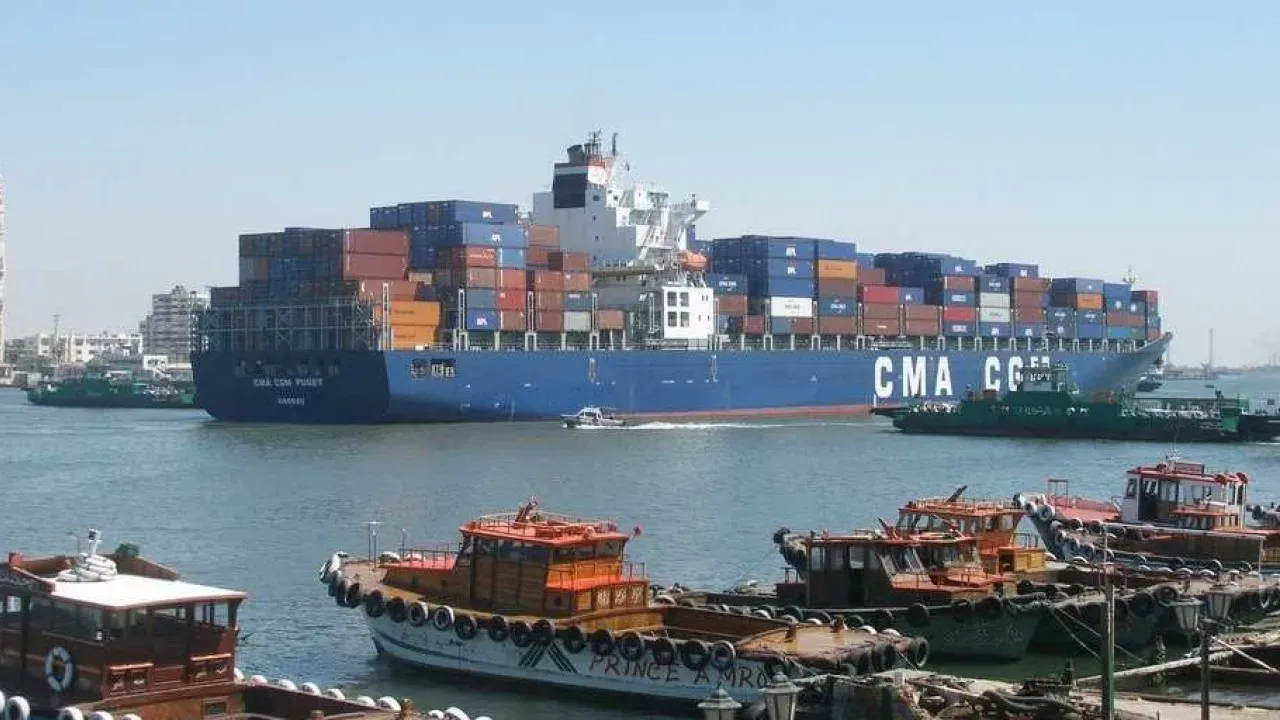
Opting for the shorter route through the Bab el-Mandeb Strait, the Red Sea, and the Suez Canal means that vessels must bear the escalating risks of conflict in the Middle East, as Iran-backed Houthi militants continue to pose a threat to passing ships off the coast of Yemen. However, because the detour around the Cape of Good Hope has absorbed 5% to 7% of global capacity—equivalent to 1.7 million to 2.4 million TEU—the need to release capacity is becoming increasingly urgent.
In its weekly market report, Linerlytica stated: "Maersk in particular is still rushing to replenish capacity, which is one of the main reasons it is willing to take the risk of returning to the Red Sea, even though most liner companies remain on the sidelines, including its Gemini partner Hapag-Lloyd."
The Danish shipping company is by no means the only one testing the waters with a return. French CMA CGM took the lead, followed by Wan Hai Lines, COSCO Shipping, and most recently MSC.
CMA CGM has already made 15 transits via the Suez route, and Maersk 11; both companies, together with MSC, have now achieved two-way north-south navigation. Wan Hai Lines and COSCO Shipping, however, have so far completed only one northbound transit each.
The consultancy added that despite tightening capacity due to worsening delays, freight rates on the Asia-Europe trade lane have still not recovered, and even the alternative Northern Sea Route has received a "cold" response from shippers.
Hot News