


10 vessels, $1 billion: as car carrier capacity tightens, shipowner makes first-ever Chinese shipyard order
Source:
2026-09-04
On September 2, China Shipbuilding Industry Corporation (hereinafter referred to as "China Shipbuilding") announced that its subsidiary, Guangzhou Shipyard International Co., Ltd. (hereinafter referred to as "GSI"), together with China Shipbuilding Trading Co., Ltd., signed newbuilding contracts on September 1, 2026 with a well-known shipowner for ten 8,200-CEU LNG dual-fuel pure car and truck carriers (PCTCs). The total contract value exceeds US$1 billion, with deliveries scheduled between 2029 and 2031.
According to shipbroker sources, the buyer has been confirmed as Ray Car Carriers (hereinafter referred to as "Ray"). As early as last month, there were reports that Ray was in negotiations with GSI for a series of post-Panamax PCTC newbuildings, with an expected order size of 10 to 14 units. Insiders revealed that the talks had been "basically finalized" and that contract signing was only a matter of time.
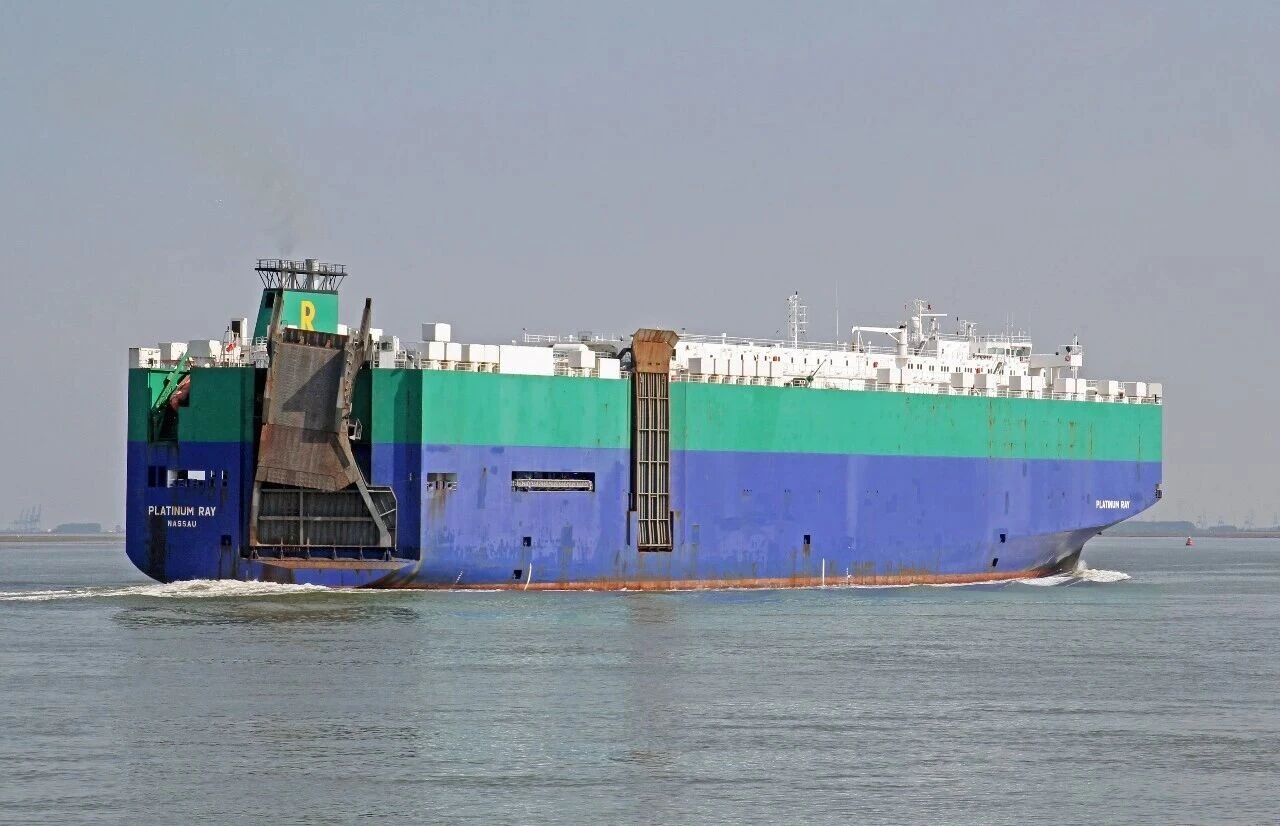
This move marks a major strategic shift in Ray's shipbuilding approach. It is understood that for more than two decades, the shipowner had consistently concentrated its orders with South Korea's HD Hyundai Heavy Industries. This means that the GSI order is Ray's first newbuilding project at a Chinese shipyard.
Clarksons data shows that the company currently operates a car carrier fleet of 66 vessels. Prior to the GSI order, it already had seven LNG dual-fuel car carriers under construction at HD Hyundai Heavy Industries. Among these seven vessels under construction, five are approximately 7,600–7,700 CEU, contracted between 2023 and 2024; the other two are approximately 7,300 CEU, which were linked to Ray in April this year.
These new vessels will become the largest car carriers in Ray's fleet. In comparison, its existing vessels and those being built in South Korea all have capacities below 8,000 CEU.
Beyond its core car‑carrying business, Ray has also been actively expanding its capital deployment. In November 2025, the company placed an additional order with HD Hyundai Heavy Industries for four very large crude carriers (VLCCs), further enlarging its crude oil shipping segment and visibly extending its business reach beyond the traditional car carrier sector.
Ray's diversified expansion comes amid unprecedented tightness in the overall car carrier market.
Global car trade, with China as the main driver
According to industry executives, surging exports from Asia—particularly China's new energy vehicles and heavy high-value equipment—have swept up all spare capacity among car carrier operators, including Wallenius Wilhelmsen and Höegh Autoliners.
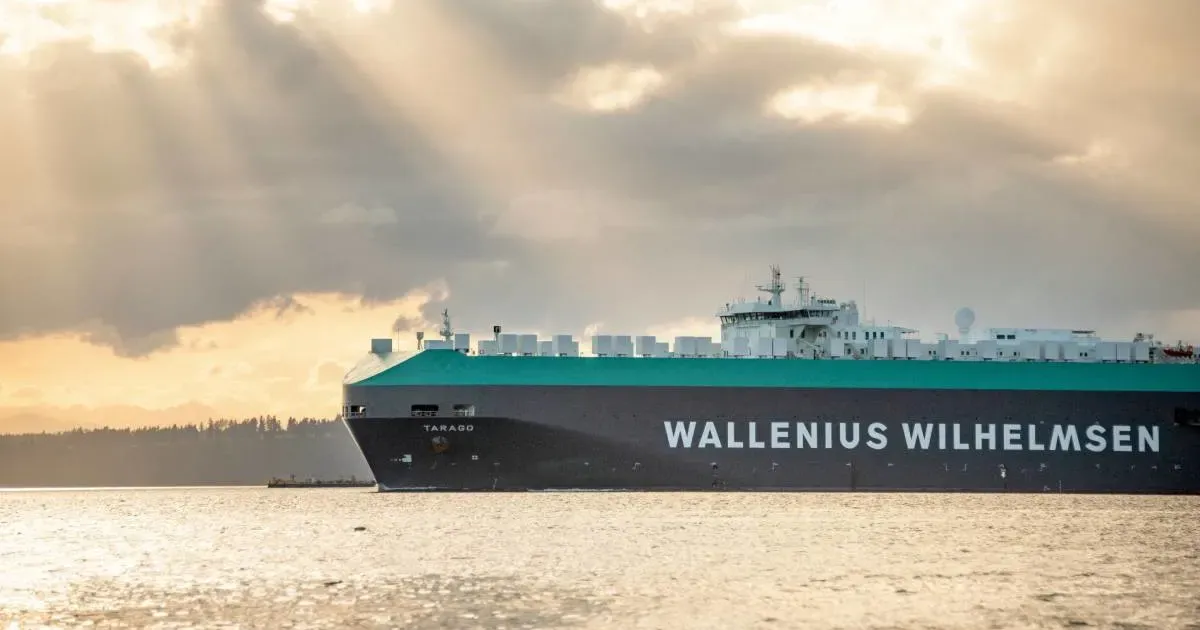
In the second quarter of this year, Asian car exports rose 73% year‑on‑year to more than 4.5 million vehicles, with the vast majority of the increase coming from China. Statistics from the China Association of Automobile Manufacturers show that in the first seven months of this year, China's automobile exports reached 6.14 million units, up 66.8% year‑on‑year, of which new energy vehicle exports amounted to 2.909 million units, a year‑on‑year increase of 120%.
Consulting firm AlixPartners released a study on June 30 projecting that China's auto exports would grow to 10 million units in 2026, up sharply from 7.1 million in 2025.
Wallenius Wilhelmsen CEO Lasse Kristoffersen said at last month's first‑half results briefing that strong demand for car carrier capacity had led to "global fleet capacity being fully booked, and we are no exception." He added that all of the company's capacity out of Asia had been fully reserved.
Höegh Autoliners CEO Andreas Enger expressed a similar view. He said that customer demand this year was stronger than anything he had seen in his career. "As long as we have ships, we can fill them," he noted. Enger estimated that there is currently a gap of about 74 vessels of 7,000‑CEU equivalent between global car carrier capacity and China's export demand—and this shortfall does not even include the 57 newbuildings scheduled for delivery this year.
Capacity crunch triggers new order wave
The shortage of capacity has pushed car carrier charter rates to multi‑year highs, while at the same time spurring operators to place intensive newbuilding orders and attracting new players to enter the market. According to Clarksons data, the one‑year time charter rate for a 6,500‑CEU car carrier rose to US$80,000 per day in August, up 88% from the end of last year and the highest level since November 2024.
Buoyed by the sustained strong market, a number of shipowners have recently launched newbuilding programmes, with the 10‑vessel mega‑order at GSI being the latest example.
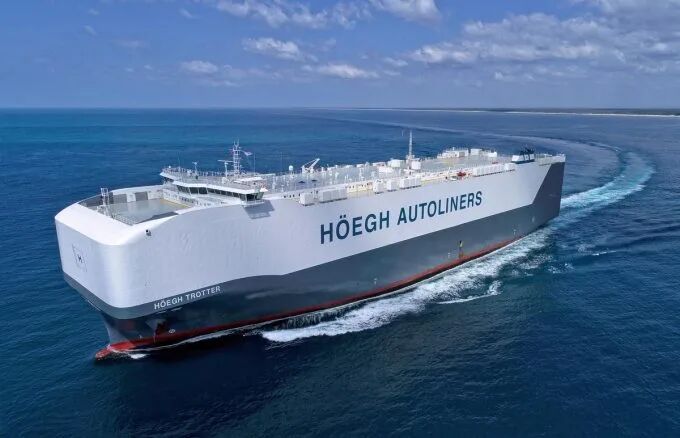
Last week, Höegh Autoliners also joined the newbuilding rush, returning to China Merchants Heavy Industry (Jiangsu) Co., Ltd. to place an order for 6+4+4 "Aurora"‑class car carriers, scheduled for delivery between 2029 and 2031.
At the end of July, Cyprus‑based Sallaum Lines signed a contract with China Merchants Jinling Shipyard (Nanjing) for 1+1 8,600‑CEU car carriers, following an earlier order in June for up to four vessels of the same type.
In the same month, Singapore‑based Eastern Pacific Shipping (EPS) and Saudi Arabia's Bahri each placed orders at Jinling Shipyard—EPS for three 7,000‑CEU vessels, and Bahri for up to four 54,476‑ton LNG dual‑fuel ro‑ro container ships.
Meanwhile, Ningbo Ocean Shipping, as a liner company, has also entered the car carrier market by time‑chartering the 7,000‑CEU LNG dual‑fuel car carrier "Clean Star".
Hot News