


There have been so many attacks in the Strait of Hormuz that the true number has become difficult to tally
Source:
2026-10-20
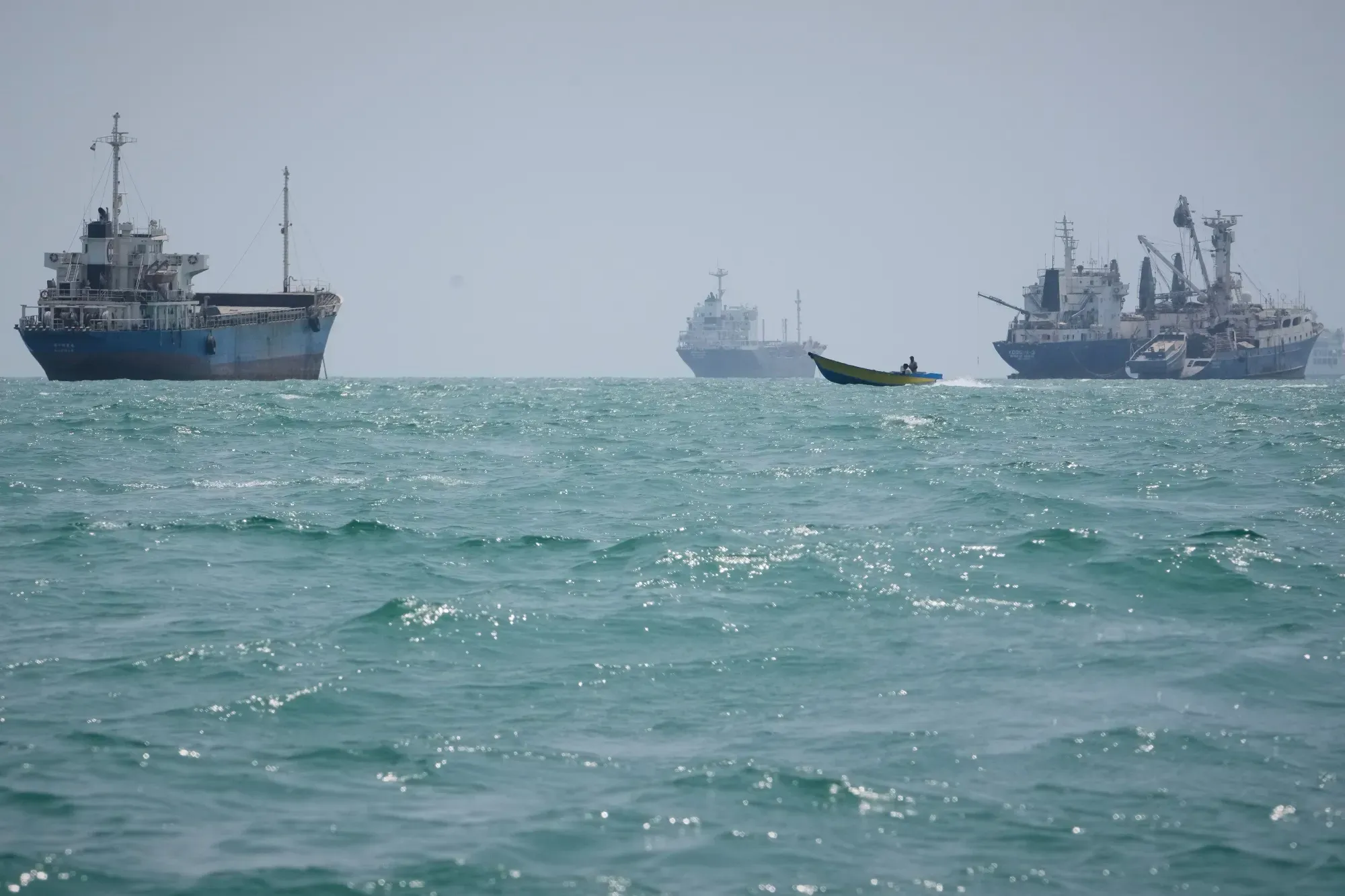
The sheer number of attacks on commercial vessels around the Strait of Hormuz has made it difficult for the UK Maritime Trade Operations (UKMTO) to keep track. On this increasingly dangerous waterway, most attacked vessels no longer report incidents directly.
Maritime Service Network CNSS has learned that UKMTO acknowledged in its latest weekly assessment released on October 16 that it is “difficult to accurately report the true number of attacks,” and warned that most attacked vessels refuse to report incidents. The agency said it has learned of more attacks through other channels but cannot include them in its statistics without verification.
Since the US-Iran conflict began on February 28, UKMTO has recorded 135 conflict-related incidents, including 114 reports of vessel damage and 76 killed or injured. The latest weekly assessment recorded 12 attacks, 10 of which occurred in the Strait of Hormuz itself, one in the Arabian Gulf and another in the Gulf of Oman. Among the vessels involved, one lost contact, two were disabled, and the outcomes for three were unconfirmed.
Violence continued throughout the weekend, with the scope of attacks extending far beyond the narrow waters of the Strait of Hormuz.
Last Friday (October 16), the very large crude carrier (VLCC) “ST3” (Marshall Islands-flagged, built in 2002) was hit by an unidentified projectile about 68 nautical miles northeast of Jubail, Saudi Arabia. Maritime security firm Vanguard said the tanker’s engine room caught fire and it lost power, and all 15 Indian seafarers on board were safely transferred to a nearby UAE-flagged container ship.
Later that day, another tanker was attacked about 78 nautical miles northeast of Jubail. The attackers fired a rocket-propelled grenade from a small boat, hitting the vessel’s port quarter. All crew members were reported safe, but the extent of damage was not fully clear.
On Saturday (October 17), the Islamic Revolutionary Guard Corps (IRGC) Navy said in a social media statement that a supertanker struck a mine in the Strait of Hormuz, causing a massive explosion and fire. Each of the vessels was carrying more than 2 million barrels of crude oil, and they attempted to transit the Strait of Hormuz with US military support after shutting down all navigation and radar systems.
The IRGC said both vessels caught fire, and one suffered a violent explosion in its engine room and lost navigability. The identities of both ships were not disclosed, and there was no independent confirmation. The Joint Maritime Information Center (JMIC) explicitly said in its latest assessment that Iran’s claims were unfounded.
On Sunday (October 18), a tugboat was hit by two unidentified projectiles while sailing south about 20 nautical miles northeast of Khor Fakkan. One crew member was slightly injured, and the tug was damaged but able to continue sailing.
Another security incident was reported in the Gulf of Aden on Saturday: a liquefied natural gas carrier was approached by a small boat carrying seven people. The people on board fired two shots at the gas carrier, after which armed security personnel on the ship fired warning shots in return, forcing the attackers to withdraw. Maritime authorities treated the incident as suspected piracy rather than a confirmed Iranian attack.
Despite the frequent violence, oil shipments continue. Signal Ocean data shows that about 13.9 million barrels per day of crude oil and another 2.3 million barrels per day of refined products still pass through the Strait of Hormuz.
In a new report released today, Nordic bank SEB argued that the current disruption “is more of a risk-premium story than a volume disruption,” and that oil continues to flow through the shuttle system established to maintain exports.
The distinction between cargo volumes and vessel transits is worth noting. The latest UKMTO data shows that 254 vessels transited in one week, about 70% below pre-war levels. JMIC reported that about 217 vessels were anchored and waiting near Fujairah and Khor Fakkan on Sunday, and congestion outside the Strait is still worsening.
Hot News