


Hapag-Lloyd Sues NYK and Two Other Companies, Seeking $2.2 Million in Damages
Source:
2026-07-20
Hapag-Lloyd has officially filed a lawsuit in the U.S. District Court for the Southern District of New York, seeking at least $2.2 million in damages from the shipowner, ship manager, and bareboat charterer over the massive cargo loss incident involving the container ship "ONE Apus" in 2020.
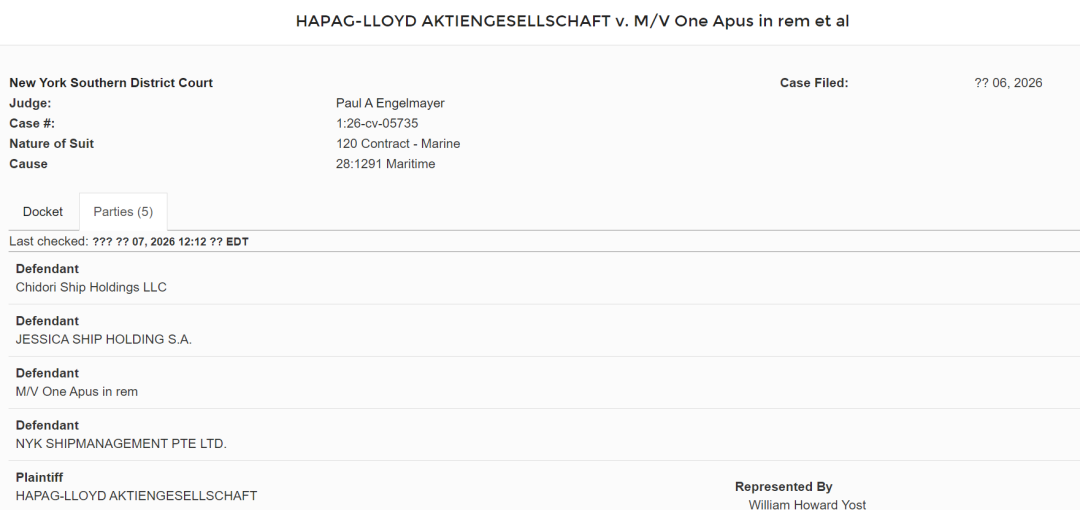
The defendants include Chidori Ship Holding (the shipowner), NYK Shipmanagement (the ship manager at the time of the incident), and Jessica Ship Holding (the bareboat charterer). Hapag-Lloyd alleges that the three parties were negligent, breached their maritime and contractual obligations, failed to ensure the vessel's seaworthiness, and failed to properly lash and secure the containers, ultimately leading to over 1,800 containers falling overboard during severe weather.
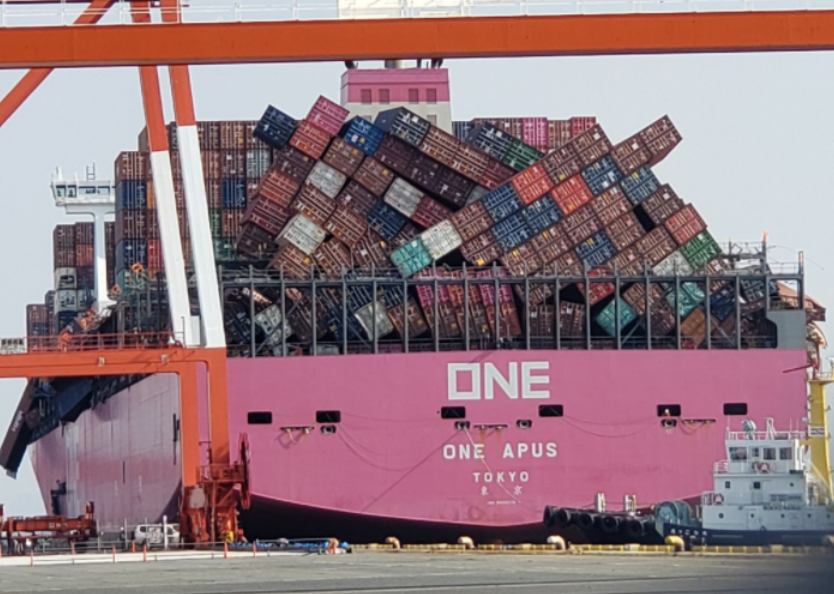
The lawsuit stems from a severe maritime accident on November 30, 2020. En route to the Port of Long Beach, U.S., the 14,000-TEU container ship "ONE Apus" (IMO: 9806079) encountered a violent storm near Hawaii. The intense rolling of the vessel caused the container lashing system to fail, resulting in a total of 1,816 containers being lost at sea or damaged, including approximately 64 containers carrying dangerous goods. According to court documents, Hapag-Lloyd lost 226 containers overboard, had 71 containers declared a total loss due to severe damage, and had another 12 containers that required repairs.
Hapag-Lloyd has specified its claims as follows: $648,000 for the 226 containers lost at sea, and $15,416 for the repair of 12 damaged containers. Additionally, following the accident, multiple cargo owners filed claims against Hapag-Lloyd. While some have been settled, certain clients are still pursuing litigation over cargo lost six years ago, with cargo claims now exceeding $1.5 million. Combining its own losses and client claims, Hapag-Lloyd is seeking total compensation of at least $2.2 million.
In the lawsuit, Hapag-Lloyd explicitly argues that the defendants failed to ensure the vessel was seaworthy before and at the beginning of the voyage, and failed to effectively lash and secure the containers in accordance with international standards, directly causing the massive cargo damage. Through this litigation, the company aims to absolve itself of liability to cargo owners and shift the losses to the vessel's operator and manager.
The "ONE Apus" incident is not an isolated case. In recent years, the increasing frequency of extreme weather has led to frequent container loss incidents involving large container ships. Such accidents often involve complex liability issues among shipowners, management companies, charterers, carriers, cargo owners, and insurers. Under international conventions such as the Hague Rules and the Hamburg Rules, carriers bear the obligation of cargo care, while shipowners and managers must ensure the vessel's seaworthiness. However, defining the boundary between "force majeure" and "negligence in cargo care" during severe weather remains a focal point of dispute in maritime litigation. The outcome of Hapag-Lloyd's case could have a significant impact on the allocation of liability in similar future incidents.
Currently, the case is still being heard in the U.S. District Court for the Southern District of New York. Given the involvement of multiple stakeholders and cross-border legal proceedings, a final resolution is unlikely in the short term. Furthermore, ongoing claim disputes between Hapag-Lloyd and cargo owners could further increase its total financial losses.
Hot News