


New Terminal Breaks Ground: Maersk Bets $550 Million on Chittagong
Source:
2026-09-02
Recently, a groundbreaking ceremony was held in Chittagong, Bangladesh, for the new Laldia Container Terminal. With a total investment of USD 550 million, the project represents one of the largest public-private partnership (PPP) infrastructure investments in Bangladesh’s history. Once completed, it will significantly enhance the country’s import and export cargo handling capacity and exert a profound impact on the regional shipping landscape.
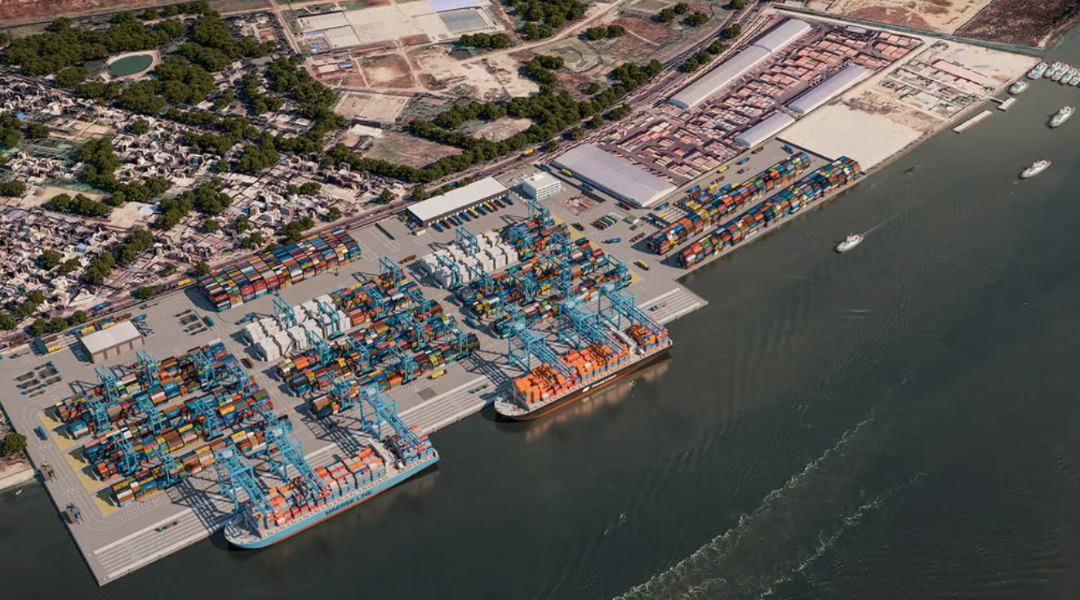
The project is being developed under the leadership of APM Terminals, a subsidiary of Maersk. It stems from a memorandum of understanding signed between Denmark and the Government of Bangladesh in 2021, with a formal investment agreement with APM Terminals reached in 2025.
Under the agreement, APM Terminals, in collaboration with the Chittagong Port Authority and local partner QNS Container Services, will drive the project forward. Under a unique cooperation framework, APM Terminals and its partners will be fully responsible for the design, financing, construction, and operation of the Laldia Terminal, while ownership of the port assets will remain with the Government of Bangladesh. APM Terminals will be granted a 30-year concession period, with an option to extend by an additional 15 years. This model is expected to serve as a template for future private-sector participation in Bangladeshi port infrastructure.
Chittagong Port handles approximately 93% of Bangladesh’s import and export cargo throughput, making it the country’s lifeline for foreign trade. However, the port has long been constrained by limited channel depth and berth length, relying primarily on feeder vessels transshipping via hub ports such as Colombo in Sri Lanka and Singapore. Currently, it can accommodate container vessels with a maximum capacity of only 2,800 TEU, severely restricting trade efficiency and cost optimization.
The Laldia Terminal, designed with greater water depth and longer berths, will enable Chittagong Port to handle container ships of up to 6,000 TEU—more than double its current capability. When it becomes operational around 2030, the terminal is expected to add 800,000 TEU of annual throughput capacity to Chittagong Port. The facility will be equipped with state-of-the-art, fully electric equipment, including 7 ship-to-shore cranes, 32 electric rubber-tired gantry cranes, and 41 electric terminal tractors, significantly reducing carbon emissions. In addition, the terminal will feature a solar power generation system and shore power facilities, making it Bangladesh’s first “green port” and contributing to the shipping industry’s decarbonization goals.
Bangladesh’s Minister of Finance and Planning, Amir Khasru Mahmud Chowdhury, emphasized at the ceremony that enhancing port capacity is an urgent priority to meet the growing demands of foreign trade. The Minister of Road Transport and Highways, Sheikh Robiul Alam, stated that the modernization of Chittagong Port will not end with the Laldia Terminal but will be an ongoing effort. He noted that several international organizations have already expressed investment interest in other terminals and infrastructure projects at Chittagong Port, and the government will actively guide international capital toward subsequent developments in line with national interests and economic priorities.
APM Terminals currently handles nearly 30% of Bangladesh’s container throughput and possesses extensive local operational experience and a well-established global network. This investment not only consolidates its leading position in the South Asian market but also demonstrates the Maersk Group’s strong confidence in Bangladesh’s long-term economic development. It is understood that Maersk is planning further investments in the country to seize opportunities presented by the rapidly growing maritime demand in this emerging market.
Hot News