





Japanese Shipbuilders See Fourth Consecutive Year of Order Decline as Structural Constraints Emerge
Source:Descendants of the Dragon
2026-04-23
According to data recently released by the Japan Ship Exporters' Association (JSEA), the order backlog at Japanese shipyards extends through 2029, with the total orderbook standing at 24.07 million gross tonnes (GT) as of December 31, 2025. The ability of Japanese yards to secure such forward coverage is largely attributed to the relatively low transparency of the domestic market, characterized by a high proportion of privately negotiated contracts with local shipowners.
Despite this robust backlog and supportive policy measures aimed at revitalizing the sector, Japanese shipbuilders have experienced a fourth consecutive year of declining new order intake, primarily due to a critical shortage of skilled labor.
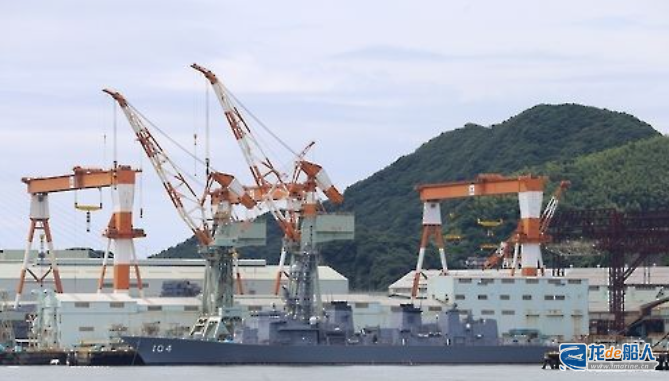
JSEA data indicates that for the 2025 fiscal year (April 2025 to March 2026), newbuilding orders received by Japanese yards totaled 9.04 million GT, a year-on-year decrease of 15 percent. This contraction is principally ascribed to declining utilization rates at domestic facilities, which are unable to keep pace with the current global surge in shipbuilding demand.
As of the end of March 2026, the orderbook for Japanese yards stood at 29.35 million GT—equivalent to approximately three and a half years of output based on current production capacity. This effectively means that delivery slots are fully booked through 2029, rendering Japanese yards largely unable to accommodate additional newbuilding inquiries. Meanwhile, global shipbuilding demand is projected to reach 90 million GT by 2035—a 30 percent increase over 2024 levels—driven by a fleet renewal cycle for vessels built around 2010 and growing demand for environmentally sustainable tonnage.
Amid this sustained global boom, Imabari Shipbuilding, Japan's largest shipbuilder, stated: "Domestic yard capacity is now insufficient even to meet demand from Japanese shipowners alone, let alone entertain new orders from overseas clients."
Constrained by capacity limitations, the market share of Japanese shipbuilders in the global newbuilding arena faces continued erosion. Over the past decade, Chinese yards have consistently accounted for over 40 percent of global output, with South Korean yards holding approximately 30 percent. The gap between Japan and these two leading nations has progressively widened.
Illustrating this trend, Chinese shipyards captured 54 percent of global new orders in 2024, while South Korean yards secured 28 percent, leaving Japanese builders with a 13 percent share. In 2025, China's share rose further to 66 percent , South Korea's adjusted to 19.6 percent , while Japan—though retaining its global third-place ranking—saw its market share contract further to 9 percent.
In an effort to revitalize the domestic shipbuilding industry and address the gap between capacity and demand, the Japanese government has introduced several supportive initiatives. Shipbuilding has been designated as one of 17 strategic sectors, with a planned investment of ¥350 billion aimed at doubling production capacity by 2035 relative to 2024 levels.
Furthermore, Japanese media reports identify the shortage of skilled labor as the primary factor constraining yard utilization rates, with several facilities unable to operate at full capacity due to insufficient manpower. Despite intensified recruitment efforts by major shipbuilders, the labor gap persists.
Japan Marine United (JMU) reported that its new graduate recruitment for 2026 increased by a factor of 1.4 year-on-year; however, the ongoing retirement of employees hired during the previous shipbuilding upcycle continues to exacerbate the workforce deficit. Imabari Shipbuilding hired approximately 100 new graduates in each of 2025 and 2026. Tsuneishi Shipbuilding has raised starting salaries for new university graduates effective 2025 in a bid to attract a larger pool of applicants.
To mitigate labor shortages, Japanese shipbuilders are increasingly turning to automation and robotics. JMU is independently developing welding robots, while Imabari is utilizing artificial intelligence to coordinate multiple robotic systems, thereby reducing reliance on manual labor. The Japanese government has also introduced complementary policies to support research and development into AI-driven robotics tailored for shipbuilding applications.
Hot News